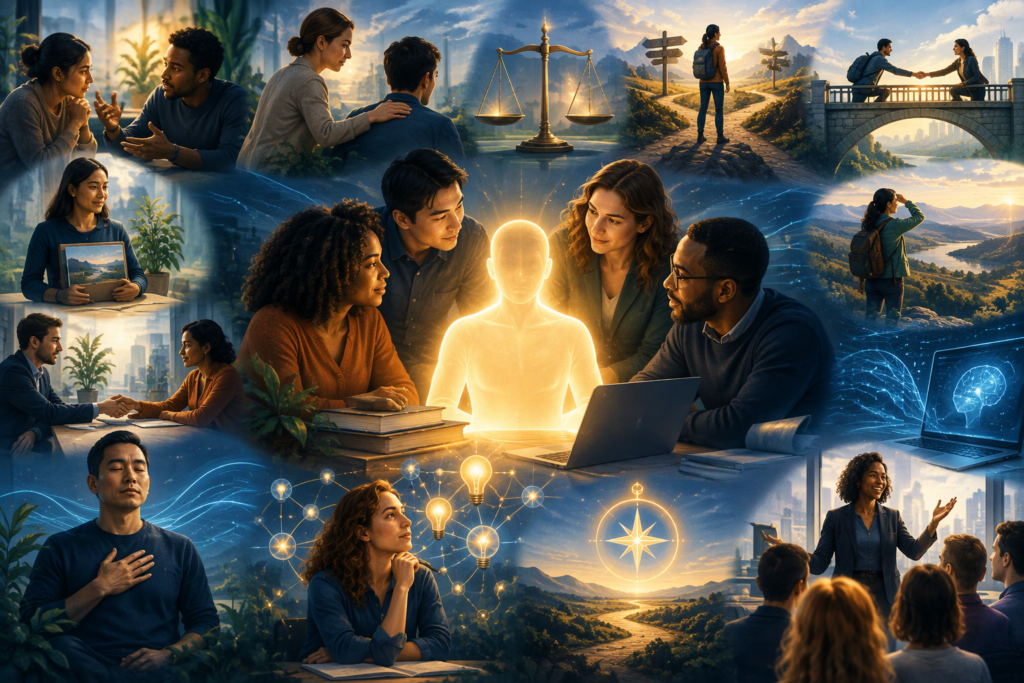
Artificial intelligence is changing how people work, learn and communicate. AI can analyze information, generate ideas, summarize documents and automate repetitive tasks in seconds. As these tools become more capable, many people are asking an important question: which human skills still matter?
The answer is not simply a list of jobs that machines cannot perform. AI may automate individual tasks, but people still provide empathy, creativity, context, responsibility and purpose. The strongest future is not humans versus AI. It is people using technology wisely while developing the abilities that technology cannot easily copy.
Why human skills still matter in the age of AI
Artificial intelligence is powerful at processing data and identifying patterns. However, real life involves more than information. People must understand how a decision affects others, recognize when information is incomplete, decide what is fair and take responsibility for the result.
These situations require experience, emotional awareness, context and accountability. Developing these abilities can help you remain valuable in an AI-powered workplace, whether you are a manager, creator, student, business owner or employee.
8 human skills that still matter
1. Empathy and emotional intelligence
Empathy is the ability to understand another person’s feelings and experience. Emotional intelligence adds the ability to recognize and manage emotions, both your own and those of other people.
AI can detect emotional language and suggest a polite response, but human understanding goes further. It involves listening carefully, noticing what is not being said and choosing a response that fits the person and the situation. This matters in leadership, education, healthcare, customer service and teamwork.
Try this: Before giving advice, ask one thoughtful follow-up question and repeat the other person’s main concern in your own words.
2. Creativity
AI can generate text, images, music and design ideas by combining patterns from existing information. Human creativity often begins with personal experience, curiosity, emotion and imagination.
People create because they want to express an idea, solve a problem, understand an experience or connect with others. AI can support brainstorming and production, but people usually provide the purpose and emotional meaning behind creative work.
If you are building a digital career, learning how to choose a clear topic and audience is an important creative decision. You can explore how to choose the right niche for a digital publication for a practical example.
Try this: Use AI to generate several starting ideas, then add a personal story, unusual perspective or original solution that the tool could not know without you.
3. Judgment and context awareness
AI can process large amounts of information, but it does not always understand the full context behind a decision. Human judgment becomes important when information is incomplete, consequences are serious or the ethical answer is not obvious.
Context awareness means understanding what happened, why it happened and what should happen next. The same words can have different meanings depending on timing, relationships, culture and previous events. Good judgment combines facts with experience, timing, values and responsibility.
Try this: Before accepting an AI-generated answer, ask what information may be missing, who could be affected and whether the recommendation fits the real situation.
4. Moral courage and accountability
Moral courage means doing what is right even when it is uncomfortable or unpopular. It may involve reporting dishonest behavior, challenging an unfair decision, protecting someone who is being mistreated or refusing to use technology in a harmful way.
Accountability means taking responsibility for what happens next. If an AI-assisted decision causes a mistake, someone must review the problem, explain it, correct it and protect the people affected. An organization cannot simply blame an algorithm.
Try this: When something goes wrong, state clearly what happened, what part you own and what specific action will prevent the same mistake from happening again.
5. Building trust and influence
Trust develops through consistency, honesty and reliable behavior. People build trust by keeping promises, communicating openly, accepting responsibility and treating others with respect.
Influence is the ability to move people toward an idea or goal without relying only on formal authority. It comes from credibility, clear communication, useful stories and an understanding of people’s needs. AI can generate persuasive words, but real influence depends on the relationship between the speaker and the audience.
Try this: Make smaller promises and keep them consistently. Trust grows more from repeated actions than from impressive claims.
6. Communication and conflict management
Conflict management involves helping people move through disagreement without causing unnecessary damage. It requires careful listening, emotional control, respectful communication and the ability to identify the real issue beneath an argument.
AI can suggest communication techniques, but serious conflict often requires trust and emotional understanding. A good communicator helps people feel heard, explains difficult ideas clearly and guides a conversation toward a practical solution.
Try this: During a disagreement, describe the shared goal first, then discuss the problem without attacking the other person’s character.
7. Emotional regulation and resilience
Emotional regulation is the ability to remain calm and thoughtful during pressure. It does not mean ignoring emotions. It means recognizing them without allowing anger, fear or frustration to control every decision.
Resilient people can recover from setbacks, learn from criticism and continue making progress when circumstances change. These abilities are increasingly important in workplaces where technology, roles and expectations are evolving quickly.
Try this: When you receive stressful news, pause before replying. Name the emotion, identify the next useful action and respond after you have regained perspective.
8. Purpose and meaning
People want more than instructions. They want to know why their work matters. A strong leader helps people connect daily tasks to a larger purpose, which can improve motivation, teamwork and commitment.
AI can increase efficiency, but it cannot decide what is meaningful to every person. Meaning comes from human values, relationships and shared goals. This is also why career decisions require more than comparing salaries or job titles.
When a career change affects your budget and daily life, practical planning matters too. Our guide to smart budgeting for the cost of living in Central Europe can help you think through that side of the decision.
Try this: Write one sentence explaining who benefits from your work and why the result matters. Use it to guide your priorities.
How to develop these skills alongside AI
- Use AI for research and routine work, but verify important information.
- Practice active listening without interrupting.
- Ask better questions instead of accepting every answer immediately.
- Take responsibility for mistakes and correct them quickly.
- Develop creative thinking through reading, writing and experimentation.
- Learn how different people may experience the same situation.
- Build professional relationships through consistency and honesty.
- Review your decisions and note what you would do differently next time.
Human skills and AI should work together
You do not need to compete with artificial intelligence in every area where machines are stronger. Use AI to summarize information, then apply human judgment. Use AI to generate ideas, then add personal insight. Automate routine work, then spend more time supporting customers, colleagues and communities.
Readers who want to develop creative skills may also benefit from this guide to photography categories and finding a creative niche.
Conclusion
Artificial intelligence can process information, automate tasks and generate ideas. However, many abilities that matter most in life remain deeply human.
Empathy helps us understand others. Creativity helps us imagine new possibilities. Judgment helps us make responsible decisions. Trust helps us build lasting relationships. Courage and accountability help us use technology responsibly.
The future will not belong only to people who know how to use technology. It will also belong to people who know how to understand, support, influence and take responsibility for one another.
Which of these eight human skills would you most like to improve this year?


It’s super and learnable article..