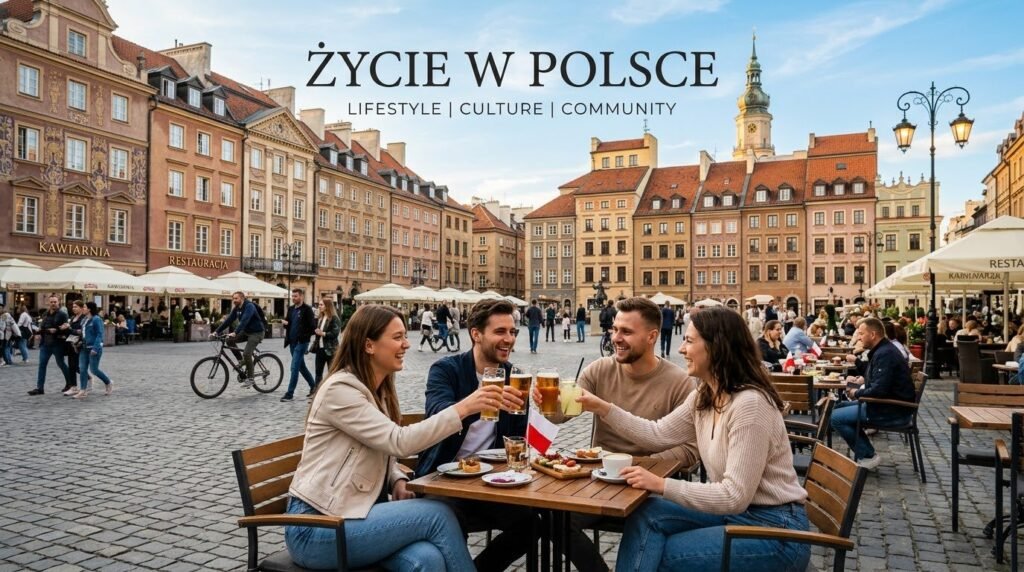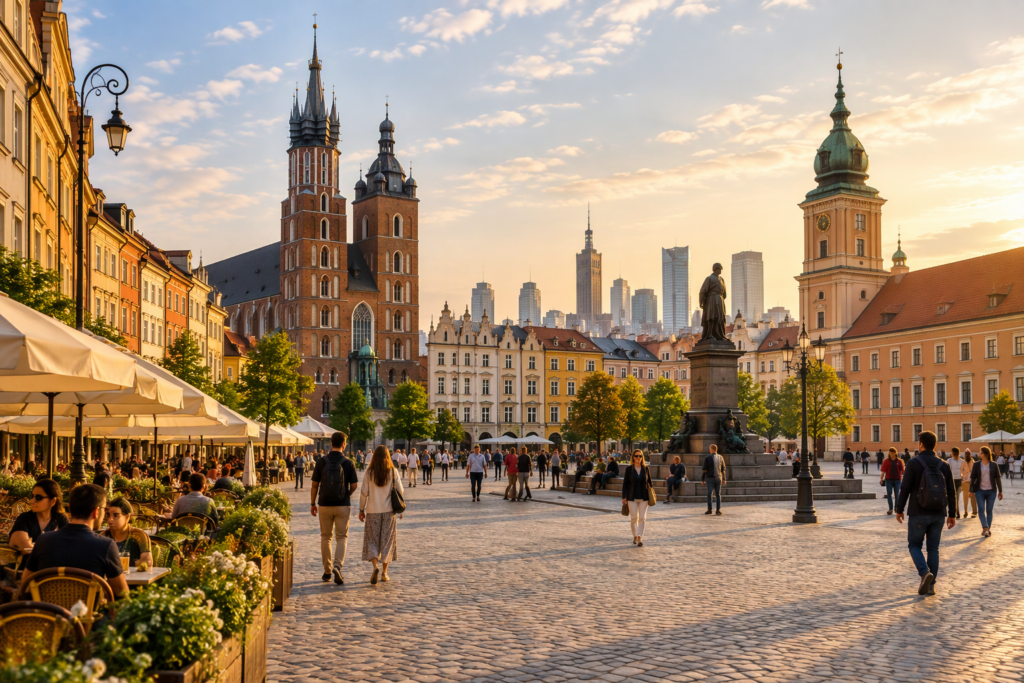
Poland is a country where history, modern life, nature, and local traditions exist side by side. Visitors can explore medieval squares, coastal towns, mountain landscapes, museums, and lively cultural districts. People considering a longer stay may also find a variety of cities, communities, universities, workplaces, and everyday lifestyles.
What makes Poland especially interesting is its variety. Warsaw feels different from Kraków, Wrocław has a different atmosphere from Gdańsk, and life in a smaller town can be very different from life in a major city.
Key Takeaways
- Poland combines historic character with modern city life.
- Each major city offers a different lifestyle and travel experience.
- The country has beaches, lakes, forests, rivers, and mountain regions.
- Polish food and traditions are important parts of everyday culture.
- Living costs and lifestyle vary significantly between regions.
A Rich and Visible History
Poland’s history can be seen in its streets, buildings, museums, memorials, castles, and public squares. Historic areas are not separate from modern life. In many cities, people work, shop, study, and meet friends in places surrounded by centuries of history.
Kraków’s Old Town, Warsaw’s reconstructed historic centre, and the historic areas of cities such as Gdańsk and Wrocław show different parts of Poland’s past. Smaller towns also contain market squares, churches, castles, and traditional architecture.
Polish Cities Offer Different Lifestyles
Warsaw: Modern and Dynamic

Warsaw is Poland’s capital and one of its most modern urban centres. The city combines business districts, contemporary buildings, parks, museums, restaurants, and historic neighbourhoods. It may suit people who want access to professional opportunities, cultural events, universities, public transport, and a faster urban lifestyle.
Kraków: History and Cultural Life
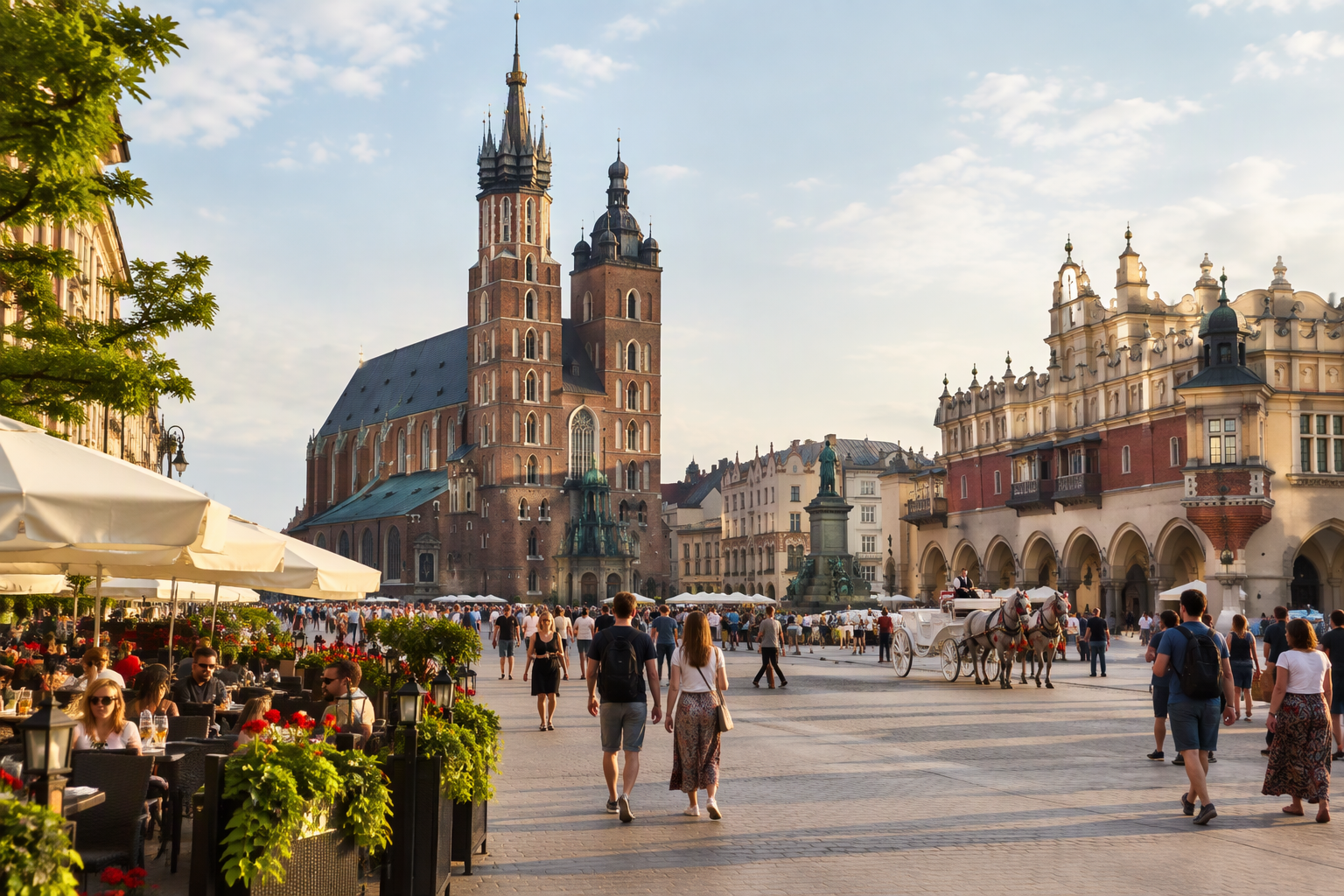
Kraków is known for its historic centre, university atmosphere, cultural attractions, cafés, and traditional architecture. It is popular with visitors, but it is also a living city with students, families, professionals, and local communities.
Wrocław: Character and International Energy

Wrocław is known for its bridges, rivers, colourful architecture, public spaces, and lively city centre. Its universities and international communities contribute to a diverse atmosphere. The city can appeal to students, professionals, visitors, and families. For a more detailed city guide, read our guide to Wrocław travel and hidden gems.
Gdańsk and the Baltic Coast
Gdańsk offers a different experience because of its maritime history and coastal setting. The Baltic coast can appeal to people who enjoy beaches, waterfront walks, history, and a slower holiday atmosphere.
Nature Is Close to Many Cities
Poland offers beaches, forests, lakes, rivers, hills, and mountains. This variety supports city breaks, mountain holidays, lakeside stays, coastal visits, forest walks, cycling trips, and cultural and nature combinations. Travellers should consider the season, transport options, weather, and distances when planning.
People interested in photographing Polish cities and landscapes can also explore our photography and finding your niche guide.
Food Is an Important Part of Polish Culture
Traditional dishes, regional recipes, bakeries, markets, cafés, and family meals all contribute to the experience of living in or visiting Poland. Visitors can explore Polish food through local restaurants, traditional milk bars, bakeries, food markets, seasonal festivals, and regional specialities.
Poland Balances Tradition and Modern Life
Public transport, online services, shopping centres, coworking spaces, modern offices, and digital communication exist alongside family traditions, local festivals, seasonal foods, and regional customs.
Lifestyle and Living Costs Need Local Research
Living costs depend on the city, neighbourhood, housing type, work situation, transport needs, personal habits, and family size. Large cities may offer more professional and cultural opportunities, while smaller towns may provide a quieter lifestyle. Anyone considering a long-term move should research a specific city rather than rely on general statements about Poland.
For a broader regional budgeting perspective, read our guide to cost of living in Central Europe.
Why Poland Can Appeal to Long-Term Residents
Poland may interest people looking for a combination of city life, culture, education, nature, and access to Central Europe. Potential long-term residents should consider work or study, housing, language, residence and employment rules, healthcare, and transport options.
Readers planning their finances can also review our guide to smart investing for beginners.
Why Poland Is Rewarding for Visitors
Poland can suit travellers interested in history, architecture, food, nature, and local culture. A first visit might focus on one or two cities, while later trips can explore smaller towns, national parks, coastal areas, mountain regions, or less familiar parts of the country.
- Research the region instead of planning only around the capital.
- Allow enough time to understand each destination.
- Try local food beyond international restaurants.
- Check transport times between cities.
- Learn a few basic Polish phrases.
- Respect local customs and community spaces.
Common Mistakes to Avoid
Do not assume one city represents the whole country, rely on general cost claims, visit only famous attractions, ignore the language, or forget seasonal differences. Poland’s regions and lifestyles are varied.
Frequently Asked Questions
Is Poland a good country to visit?
Poland can be rewarding for people interested in history, architecture, food, culture, nature, and city travel.
Is Poland a good place to live?
Poland may suit people who value access to cities, education, work opportunities, cultural life, and varied landscapes. The right choice depends on personal goals and circumstances.
Which Polish cities are popular with visitors?
Warsaw, Kraków, Wrocław, and Gdańsk are commonly considered by visitors, while smaller towns and regional destinations can also offer memorable experiences.
Is Poland expensive?
There is no single answer because costs vary by location and lifestyle. Research the specific city, housing situation, and spending pattern.
Do you need to speak Polish to live in Poland?
Some people manage with limited Polish in international environments, but learning Polish can make communication, administration, work, and social life easier.
Conclusion
Poland is interesting because it offers many different experiences within one country. Visitors can explore historic cities, coastal areas, mountains, forests, museums, markets, and local restaurants. Residents can choose between large urban centres, smaller towns, and communities closer to nature.
The most rewarding way to experience Poland is to look beyond simple descriptions and choose the region and lifestyle that fit your goals.
Explore more practical guides about Poland, Central Europe, travel, and modern living on The Daily Vibe 24.