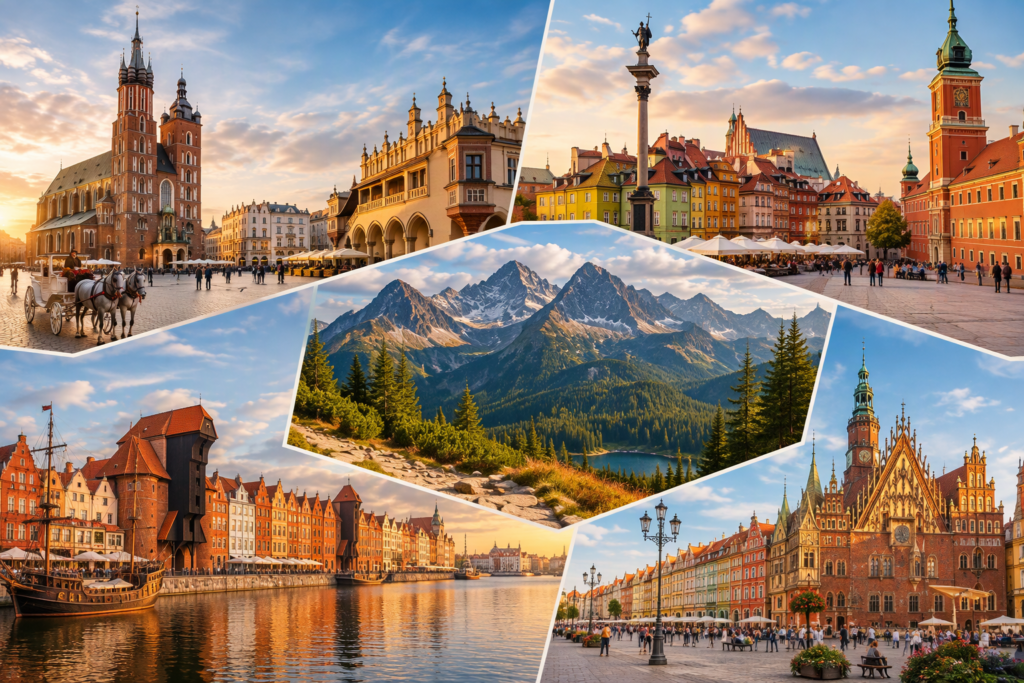
There are European cities that announce themselves with grand boulevards, famous landmarks, and crowds of visitors moving from one attraction to the next. Then there is Wrocław, a city that reveals its magic through colorful facades, historic bridges, riverside walks, and tiny bronze gnomes hiding in plain sight.
Located in western Poland, Wrocław combines architectural beauty, vibrant culture, and a relaxed atmosphere that makes it easy to explore at your own pace.
Discover the Colorful Magic of the Rynek
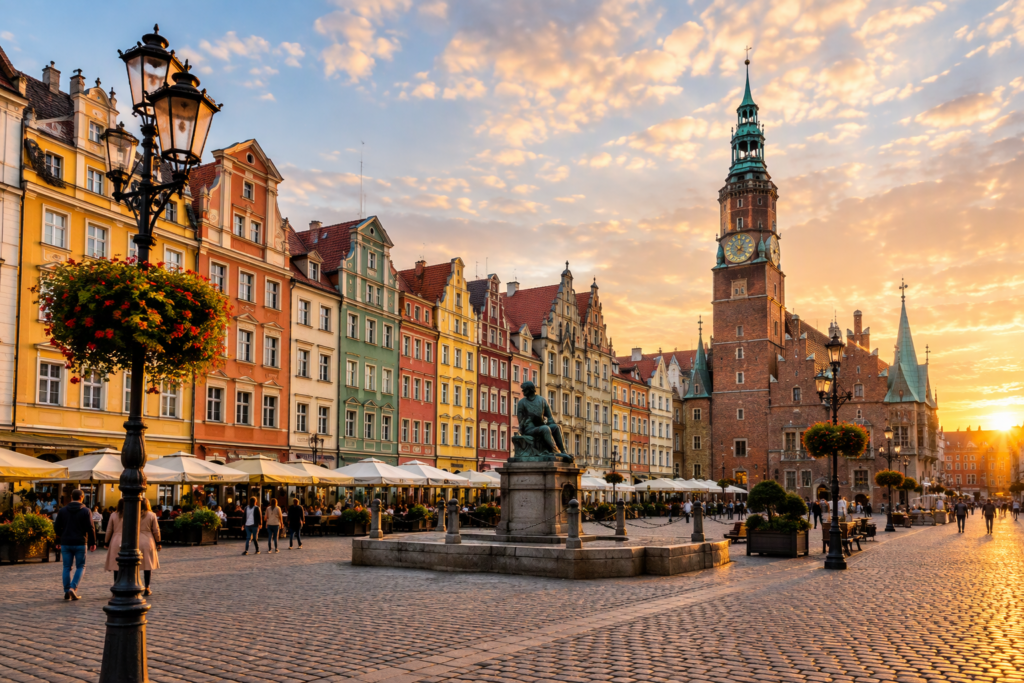
The Rynek, or Market Square, is the vibrant heart of Wrocław and one of Europe’s most beautiful medieval squares. Colorful townhouses, ornate details, cafés, and restaurants create an inviting place to explore or pause with a coffee and a local meal.
The Old Town Hall, with its Gothic and Renaissance details, is one of the square’s most recognizable landmarks. In the evening, its illuminated buildings create a memorable atmosphere.
The Hansel and Gretel Houses
Near St. Elizabeth’s Church stand two charming medieval buildings known as the Hansel and Gretel houses. Connected by an ornate archway, they form one of Wrocław’s most photographed corners and show how the city’s character often lies in its unexpected details.
Go Gnome Hunting Across the City
Wrocław’s famous bronze gnomes, known locally as krasnale, appear throughout the city. You may find them outside shops, near fountains, on lamp posts, or engaged in amusing miniature activities.
The gnomes are linked to the Orange Alternative movement, an artistic and anti-authoritarian group that used humorous imagery during the communist era. Today, searching for them is a playful way to discover cafés, galleries, courtyards, and quieter streets.
Experience the Timeless Atmosphere of Ostrów Tumski
Ostrów Tumski, or Cathedral Island, is the oldest part of Wrocław. Its cobbled lanes, historic churches, riverside setting, and distinctive gas lamps create a peaceful atmosphere.
At dusk, a lamplighter dressed in traditional clothing walks through the district, lighting the lamps by hand. The Cathedral of St. John the Baptist and the nearby bridges are especially beautiful in the evening.
Admire the Bold Design of Centennial Hall
Centennial Hall is one of Europe’s important modernist landmarks. Completed in 1913, its innovative reinforced-concrete dome helped establish it as a milestone in modern architecture. In 2006, it was added to the UNESCO World Heritage List.
The surrounding complex includes green spaces, the Japanese Garden, Pergola, and Wrocław Multimedia Fountain, making it a rewarding destination for architecture and leisurely walks.
Taste the Flavors of Wrocław
Wrocław offers many ways to explore Polish food culture. Try pierogi, żurek, barszcz, and other traditional dishes, or visit a bar mleczny for an affordable, local-style meal.
The city also has a lively contemporary dining scene, with specialty coffee shops, craft beer bars, bakeries, international restaurants, and modern interpretations of Polish cuisine.
Enjoy Wrocław at a Relaxed Pace
Much of the historic center can be explored on foot. Walk beside the Oder, relax on a riverside island, visit the Market Hall, explore the University of Wrocław, or discover the creative streets of Nadodrze.
Why Wrocław Deserves a Place on Your Travel List
Wrocław combines grand architecture with everyday warmth, historic traditions with youthful energy, and major attractions with countless small discoveries. You can explore the Rynek, search for gnomes, admire UNESCO-listed architecture, and watch gas lamps glow along Ostrów Tumski all in one memorable trip.
Plan More Poland Travel
If you are planning a wider trip, explore the Lifestyle and Travel guide, read the travel interview with Izabela Farys, and use the Moving to Poland guide for broader planning ideas.
If you are looking for a European city that feels authentic, colorful, and pleasantly unhurried, Wrocław belongs on your list. Have you visited Wrocław, or is it now on your travel plans? Share your favorite places, travel tips, or questions in the comments below!